It’s a rainy January afternoon, the kind where socks slide on hardwood floors, and the couch starts to look like a magnet. Your kid says, “I’m bored,” and the screen siren song kicks in.
This is where screen-free activities for children can save the day, not with perfect crafts or big plans, but with a simple menu of options that feel like play. Screen-free time helps kids move their bodies, sleep better, and practice patience, focus, and social skills without a lecture.
Below are hands-on ideas your children can rotate through throughout the year. Use your judgment to determine whether they are appropriate for your child, taking into account their skill level, age, and trustworthiness.
Affiliate Disclosure: As an Amazon Associate, I earn from qualifying purchases. This helps support my work and allows me to continue creating helpful content — thank you for your support!
Curiosity Lab at Home: science projects kids beg to try
Easy science experiments (use a kid-friendly experiment book)
If your kid likes the feeling of “I made that happen,” start with one or two experiments a week and keep it light. Set up a small “science tray” (paper towels, measuring spoons, food coloring, vinegar, baking soda, cups) so you aren’t hunting supplies at the last minute. Before you begin, have them guess what’ll happen, then test it and talk about what surprised them.
For book ideas, we love 100 Science Experiments by Usborne. It’s an older edition (2009) and sometimes can be hard to find in print. However, if you can get your hands on it, the book has great experiments that are easy to do at home – from movie frames, handmade paper, pinhole cameras, kaleidoscopes, weather measuring tools, the list goes on. The book includes color illustrations and step-by-step photos that show how to assemble them, making it easy to follow. Homeschooling families can use this book as a science supplement for grades 1-4, and smaller kindergarten children are fully capable of understanding the concepts and doing the work with supervision and guidance.
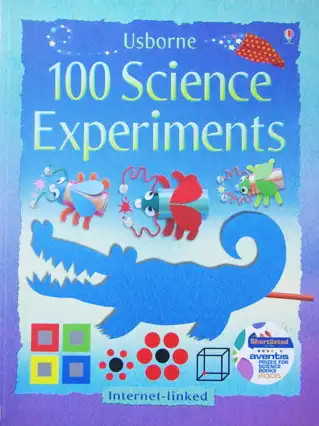
Other good ones are: The 101 Coolest Simple Science Experiments, and 101 Science Experiments and Projects for Children, 100 Awesome Science Experiments for Kids. Check your library first, then buy the one your child keeps asking for.
Use a handheld microscope, then make homemade microscope slides
A handheld microscope turns your kitchen table into a discovery station. The first time kids see the jagged edge of a grain of salt or the tiny “tiles” of a leaf, their whole face changes. Start with a handheld microscope, then level up with homemade slides so they can compare samples side by side.
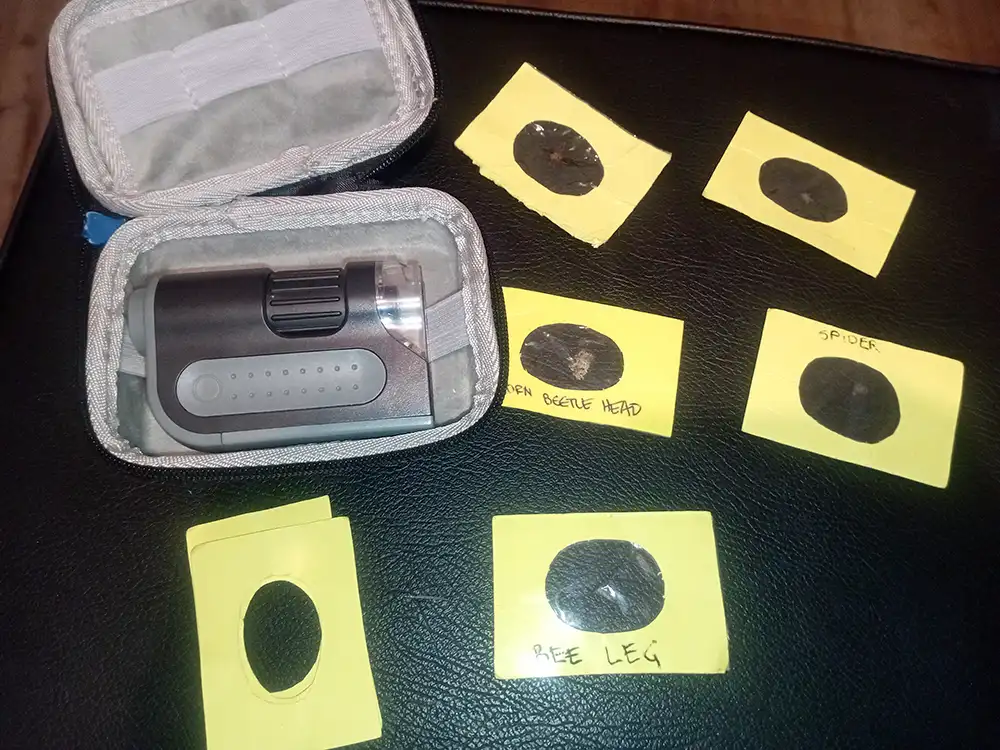
We love this microscope because it has 60X-120X magnification, is small enough for children’s hands, and includes an LED light.
We didn’t go too fancy with the microscope slides, especially since we didn’t want to use glass slides with children under 5. We found that you can collect dead insects and bugs from around the house and yard, then laminate them onto cardstock cards. For best results, cut a hole in the cardstock large enough for the insect, and don’t laminate big, juicy bugs like moths, or they will ruin your laminator (or at least make you spend an hour taking it apart just to clean out the parts).
Make a terrarium, then keep a beetle as a tiny pet
A terrarium feels like a small jungle in a jar, and kids treat it like a living story. Use a clear container with a secure lid and airflow. A homemade terrarium can take time and preparation to create, but it’s a highly rewarding experience. The goal is not perfection, it’s observation.
We made a great working terrarium following the instructions in this video:
Here is an image of our terrarium and its special occupant, Sharp Jaws. Sharp Jaws had a long, meaningful life and has since been preserved forever in a museum-quality epoxy block.
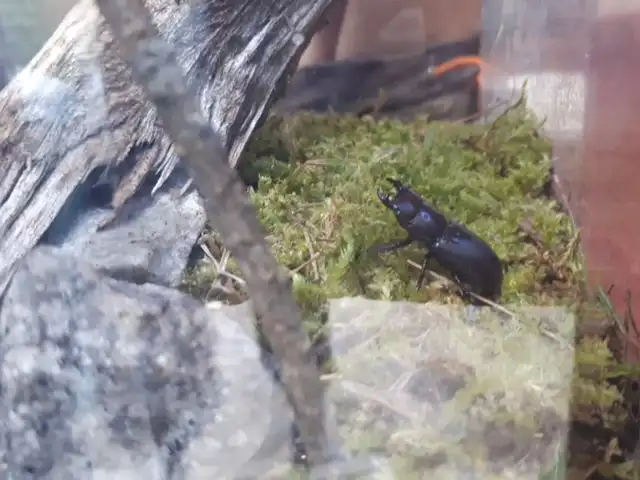
Alternatively, you can also just purchase a set if you’re short on time.
If you want a beginner-friendly beetle, many families start with pet-store species such as sun beetles or rhino beetles (availability varies). Keep it at room temperature, offer fresh produce or beetle jelly as directed, and make handwashing a rule after handling. Give kids simple jobs: mist the soil lightly, swap food, and write down what the beetle does at different times of day.
Alternatively, you can do some digging and find a free beetle, which is what we did.
Preserve found dead bugs in epoxy (a “nature museum” keepsake)
This one lands with kids who love treasures in pockets. It’s also a respectful way to study insects close up, as long as you only use insects you find already dead outside, or perhaps want to preserve the pet bug that your child cared for in their terrarium. Set it up like a tiny museum project: choose one specimen, note where it was found, and add a label with the date and location.
Epoxy requires adult-only mixing and pouring, along with gloves and good ventilation. Follow the product directions exactly, and don’t let kids handle uncured resin. When it’s done, the piece becomes a paperweight or a mini display your child will want to show everyone who walks in the door. You can also use them to make keychains or board-game tokens.
Grow crystals you can hold (a slow, magical experiment)
Crystal growing is perfect for kids who like checking on something every day, like a pet that doesn’t run away. You can use a kid crystal kit, or try a simple home method such as borax or sugar crystals with hot water (adult help required for heat). The real fun is watching the change, not rushing the result.
Keep the jar still, use clean string, and hang it so it doesn’t touch the sides. Start a “crystal journal” where your child draws what they see each day, even if it’s “nothing yet.” That quiet patience is the experiment too.
We’ve had great success growing crystals with this kit. It includes three crystal kits and a wide selection of gems. We found that following the instructions is important, as one of our children moved the growing crystal while it was still forming, which made the crystal not as strong as the other ones, which were not moved. In general, we love buying Advent calendars even if it’s not Christmas time, as they are usually well priced and the quality of the items is usually better than other items.
For more screen-free science inspiration, Science Sparks’ screen-free activities ideas can help you stock your “try this next” list.
Make and Build Things: hands-on projects that beat any app
Make a pinhole camera and take real photos the old-school way
A pinhole camera is basically teaching light to behave. You need a dark box or a can, a tiny hole, and a way to hold photo paper or film inside. When light sneaks through that tiny hole, it forms an image. Kids love that it feels like a secret trick, except it’s science.
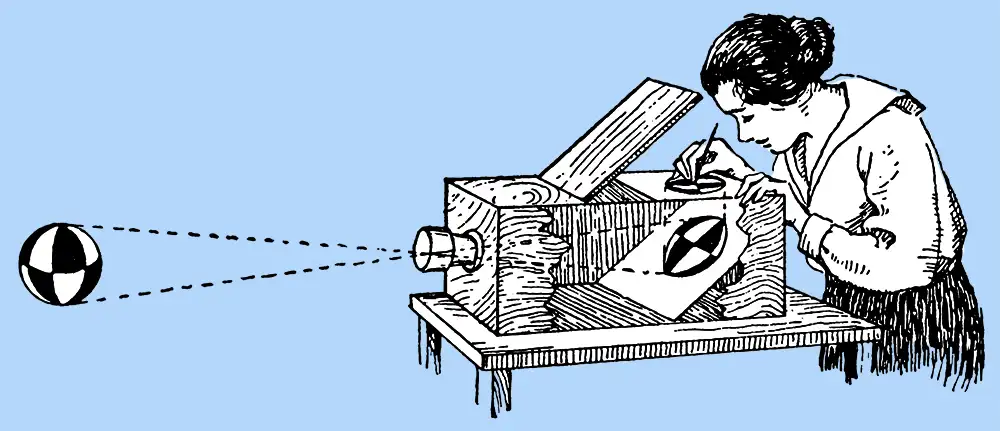
Plan for patience. Photos take time, and results can look dreamy or imperfect, which is part of the charm. Adult help is best for cutting the hole neatly. Try it on a sunny day, then keep a notebook of what worked (hole size, exposure time, brightness).
You will also need developer, stop bath, and fixer, if you want the image to last. Or, you can search locally to see if there are still any photo labs to develop your image.
Take apart old electronics (a safe “inside the machine” workshop)
Some kids don’t want to build; they want to see what’s inside. Set firm rules: only broken items, unplugged, batteries removed, and always with adult supervision. Add eye protection, a small tool kit (Amazon link), and a sorting tray for screws so the floor doesn’t turn into a metal minefield.
Give your child prompts like “Find the speaker,” “What spins?” and “Which part looks like a tiny city?” (hello, circuit boards). When you’re done, do a simple cleanup: parts in a bin, screws in a jar, and anything sharp goes straight to the adult.
Safety tip: Many, if not all, electronics contain lead, particularly in the solder used on circuit boards. Make sure your child knows that and wears gloves. If your child wants to get into soldering, do your research on lead safety in solder, as even lead-free solder can contain lead.
Build the Eiffel Tower with K’NEX for a big win you can display
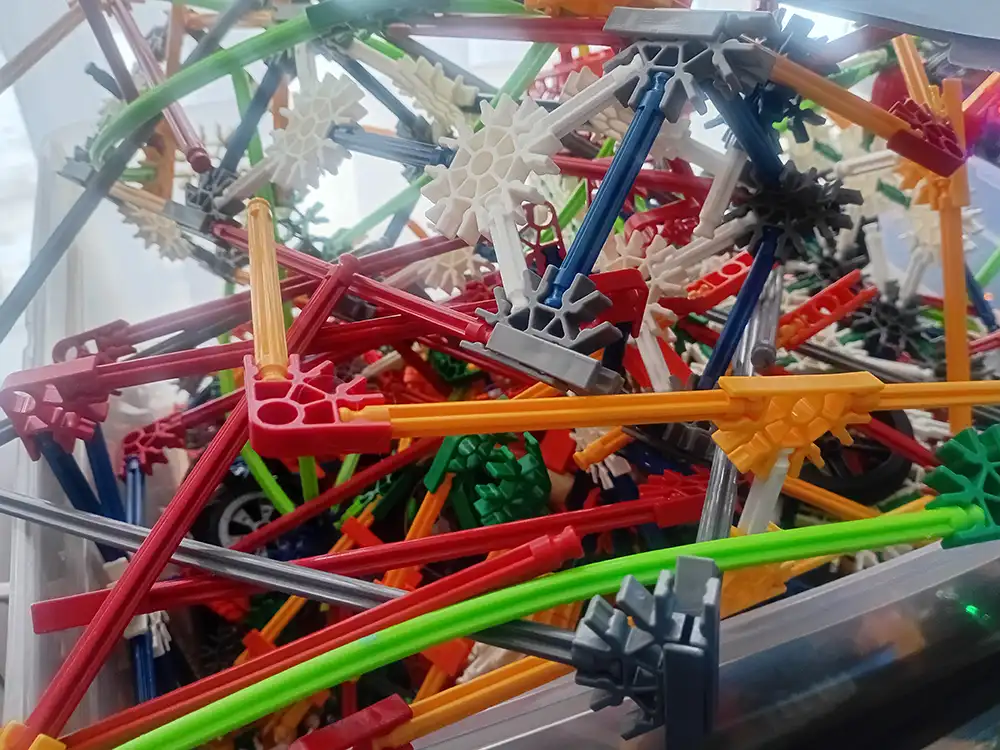
Some projects feel like a mountain, and kids secretly love that. The K’NEX Architecture Eiffel Tower kit is approximately 29 inches tall, includes many pieces, and is assembled in about 40 steps. It’s generally best for ages 9 and up, though younger builders can help with sorting and snapping pieces together. Our 6-year-old has loved building it (though he sometimes asks for help with some harder-fitting pieces), so the 9-year-old’s recommended age is definitely flexible.
Make it smoother by sorting pieces first and building in short sessions. Each platform becomes a checkpoint, like a level you can actually touch. When it’s finished, don’t hide it in a closet. Put it where everyone can admire the patience that built it.
Play the Original Tower Game
Some games have withstood the test of time, and this one is one of them. It’s seemingly so simple, yet can occupy children and adults alike for (almost) hours.
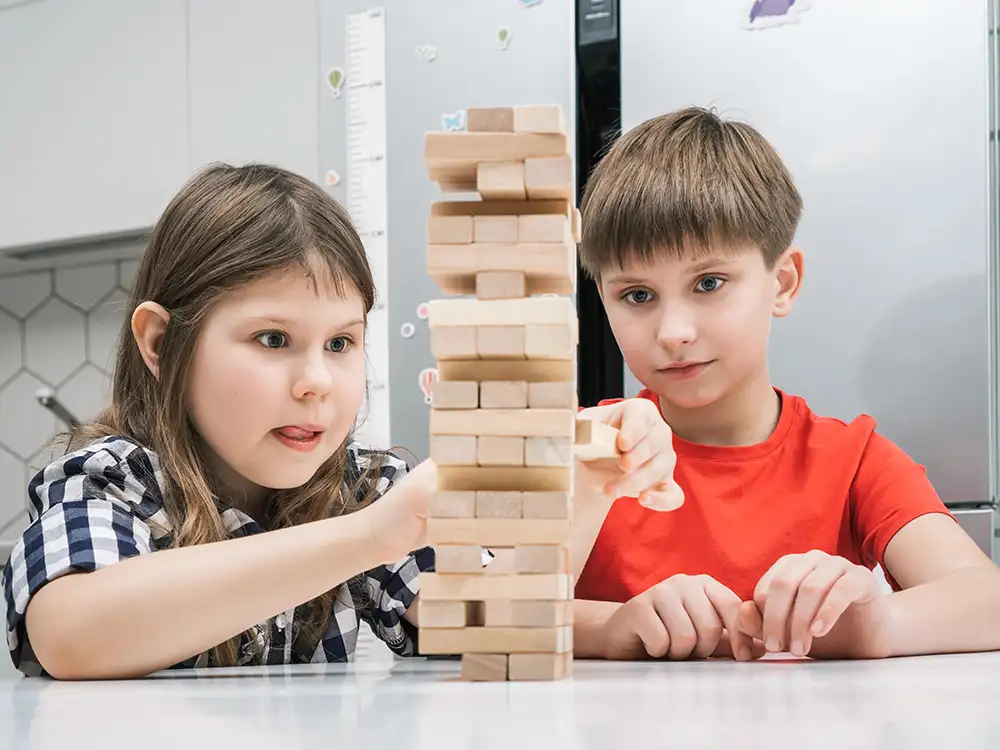
We recently visited a beautiful outdoor space just north of Ottawa, where they had numerous outdoor games, designed to keep people in the area and occupied while they (and their children) enjoy ice cream and other snacks. Not surprisingly, they also had a giant tower game which attracted a lot of attention. If you are looking for a yard game, this one can certainly be built on a low budget with minimum tools.
Invent a board game your family will actually play
A homemade board game feels like your kid created a whole world, then invited you in. Keep the formula simple: pick a theme (space pets, jungle rescue, insect jungle), set one clear goal (reach the end, collect five tokens), and make three basic rules. Aim for a game that plays in 15 minutes, because that’s how you get repeat plays.
Use poster board, markers, index cards, dice, and small toys as tokens. Then playtest and revise together. Kids learn fast that rules should feel fair. When it works, help them wrap it and gift it to grandparents. Nothing beats “We played your game after dinner.”
Music, Art, Movement, and Play: simple joys that fill the day
Learn guitar with tiny daily practice that adds up fast
Guitar is loud enough to feel exciting, but portable enough to fit real life. Start with a kid-size guitar, which is a real instrument and not a toy, learn two or three easy chords, and practice a simple strum pattern that sounds like a song right away. Keep practice short, even five minutes counts. We would recommend the Yamaha CS40, a 3/4-size guitar, as a starting point. It is a great-sounding classical guitar with nylon strings.
A “two-song goal” works well. Pick two easy songs your child likes, then let them repeat them until they remember. Sore fingertips are normal at first. Breaks are smart, and tiny wins deserve a cheer.
We love Simply, though there is some household debate about the instructor’s guitar strumming technique. Take that with a grain of salt, as it comes from a world-renowned Flamenco guitarist. In either case, Simply gives you a trial period so you can make up your own mind.
Learn piano by building a habit, not perfection
Piano has a calming effect, even when kids are still figuring it out. Start with hand position and simple melodies, and keep sessions to 5 to 10 minutes. A beginner book or printable songs help. We had a very lengthy process of getting started, almost gave up, and eventually made great strides with a homemade kindergarten-level curriculum I developed. We then transitioned to the Simply Piano app, which has been working well so far.
To get us started, we used many materials I purchased on Etsy, and also games that we made.
We love the Yamaha P125 and use it daily at home. It has an incredible sound, built-in speakers, and weighted keys that feel really nice, just like a real piano.
But really, any keyboard is good enough to start with. If you are looking to upgrade, find a piano keyboard that is full-size with 88 keys, and has weighted keys. For a more budget-friendly option, the Yamaha P145BT is a fantastic choice. Next to sound and action, what is important is to get the stool position correct relative to the piano height, as this affects the position and angle of the hands.
Learn chess, then use it as a quiet go-to game
Chess is great for kids who like puzzles, patterns, and “one more try.” Begin by learning how each piece moves, then practice simple checkmates with just a few pieces before playing full games. A chess set you can leave out on a shelf helps a lot.
Keep the mood friendly. Use short games at first, and skip the timer until they’re ready. When kids lose, they learn to rewind the game in their head and spot the moment things shifted. That’s a life skill hiding in a board game.
Learn to draw with easy prompts and a no-pressure sketch habit
Drawing gets easier when it feels safe. Start with circles, boxes, and triangles, then turn them into animals, vehicles, faces, and monsters. Keep supplies basic: pencils, erasers, markers, and a sketchbook.
Make a daily prompt jar with slips like “something you saw today,” “your dream treehouse,” or “a creature with three tails.” Then hang favorites in a hallway “kid art gallery.” Kids stand taller when their work lives on the wall.
If your children are anything like ours and “don’t know how” to draw something and ask for constant help, try Simply Draw. It’s a simple app that shows the step-by-step process for drawing objects and animals, and it includes a customizable drawing profile based on what you’d like to learn to draw, so you can set it up to focus on animals, plant life, objects, and more. At the beginning of the drawing lessons, a part that bothered me was a confused zebra; however, we haven’t noticed any other agenda so far.
If you are looking for a compact art set that looks nice and has everything in it, check out this one:
Hide-and-seek (with simple house rules)
Hide-and-seek burns energy fast, even indoors. Set boundaries to keep it fun: no closets that latch, no hiding behind appliances, and a clear “home base.” A good twist is “hot and cold” clues for younger kids who get stuck.
The best part is the giggles, but there’s also practice in taking turns, waiting, and handling the big feelings of “I can’t find you!”
Ride a bike and build real confidence outdoors
Bike rides don’t need to be long to matter. Start with a short loop, then add a few minutes each week. A properly fitted helmet is non-negotiable, and so is a quick safety check (tires firm, chain on, brakes working).
Kids love watching their “map” expand, one street at a time. It’s freedom they earn with balance and practice.
Play with kinetic sand (without it taking over your house)
Kinetic sand feels like magic in the hands, soft, moldable, and oddly calming. Keep it contained by using a tray or shallow bin, and set a simple rule: sand stays in the tray. Add cups, molds, and toy tools to turn it into a construction zone.
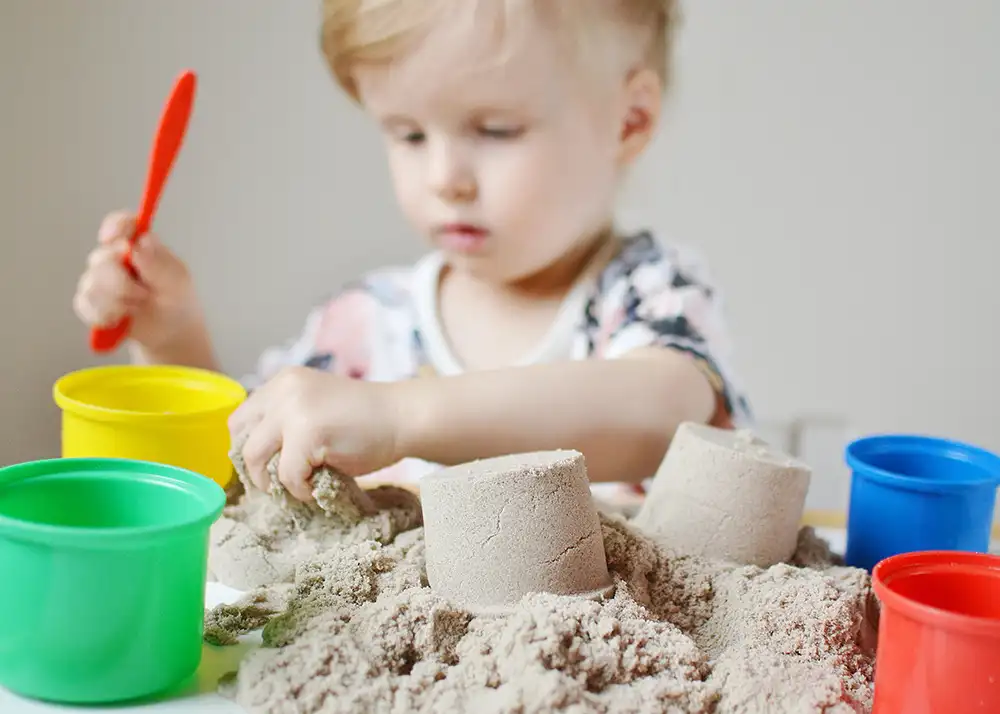
It’s a great option when kids want to make something but don’t want instructions.
Play card games that teach turn-taking without a lecture
Card games are small, cheap, and surprisingly sticky as family traditions. Start with Go Fish, War, or Crazy Eights, then add new games as kids grow (Amazon link). Keep the vibe light, and let younger kids win sometimes without making it obvious.
Cards are a sneaky way to practice memory, turn-taking, and losing without a meltdown.
Play board games that fit your kid’s age and mood
Board games work best when they match attention span. Choose quick games for weeknights and longer ones for weekends. Set up a “game shelf” where kids can reach choices themselves, and rotate games so old favorites feel new again.
These games teach waiting, teamwork, and how to follow rules even when you’re excited.
We love Kid’s Monopoly, and lately Cat’s Crimes. Little Scootie and Little Hazel are in constant competition to win the game around here.
Make an obstacle course gym in the house
Turn your living room into a mini gym using pillows, painter’s tape lines on the floor, chairs for tunnels, and a stopwatch for silly challenges. Keep it simple: hop to the couch, crawl under the chair tunnel, balance on the tape line, then toss a sock into a basket.
Clear sharp corners, and set one rule that prevents chaos: no jumping near tables. Give kids “reset jobs” so it stays cooperative, not destructive.
Set up a bowling lane at home
Home bowling is easy and loud in the best way. Use empty plastic bottles as pins, add a little water or rice for weight, and roll a soft ball down a taped lane (Amazon link). Mark a foul line with tape so kids don’t creep closer every turn.
Let one child set pins while the other rolls, then switch. It turns “my turn” into “our game.”
Develop a love for reading (even for reluctant readers)
Reading sticks when it feels like a treat, not an assignment. Make a cozy spot with a blanket and good light, let kids choose books that match their real interests (bugs, sports, mysteries), and don’t dismiss graphic novels or nonfiction. Reading aloud still matters well past the little kid years, and it’s often the bridge to independent reading.
Try a bedtime chapter routine, regular library trips, and pairing books with hands-on play (bug books after your terrarium, camera books after pinhole photos).
Read with puppets and make objects from the stories in the books
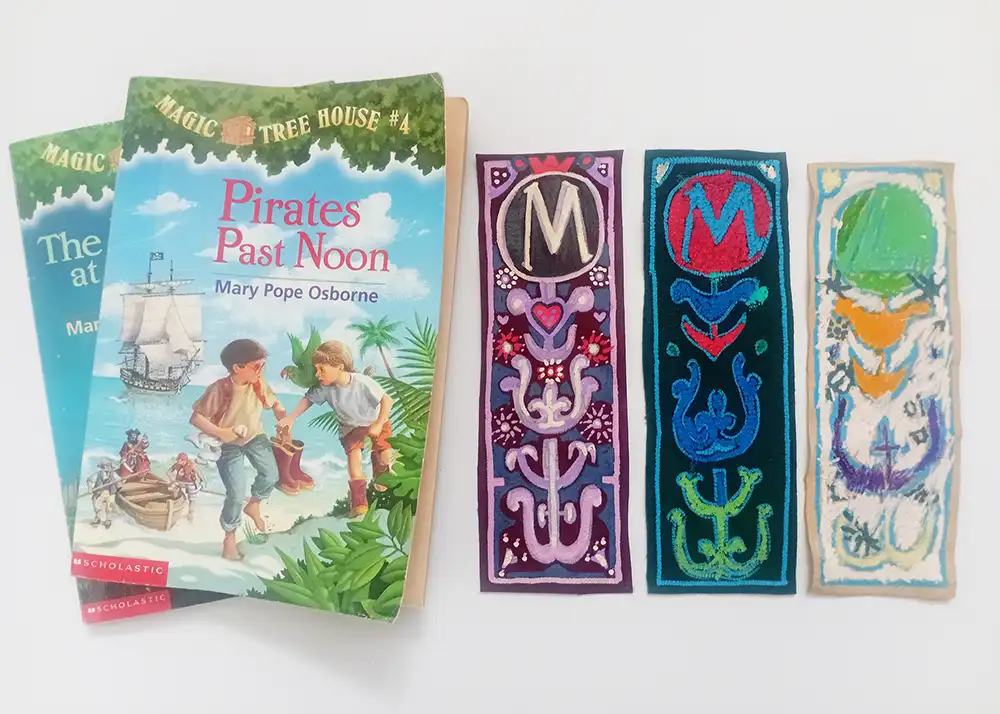
Having had reluctant readers in our house, we overcame this by making reading fun. While reading the Magic Treehouse series (which we highly recommend for ages 4 to 10), we made leather bookmarks like the M bookmark from the books (using leather from a thrift-store garment and acrylic markers) and a polymer clay medallion, which we then painted gold. We also have a large white puppet mouse named Mr. Fernandes, who likes to read the books when children don’t want to listen, and their attention suddenly comes back (he has a funny, irresistible voice and likes to chuckle between his sentences).
Conclusion
Screens aren’t the enemy, but kids still need the real stuff: dirt under nails, music in the room, rules they invent, and games where feelings show up. Pick one activity from this list for the week, gather supplies once, and repeat it until it feels normal.
A simple “screen-free menu” on the fridge can end a lot of boredom battles. Ask your child to choose their top three activities, then help them set up a spot to do them. The habit you’re building is bigger than any rainy afternoon.